

Healthcare Jobs: A Complete Guide to Careers That Truly Make a Difference. Healthcare jobs are more than just professions—they are commitments to human life, compassion, and service. Whether it’s a doctor saving lives in an emergency room, a nurse holding a patient’s hand during recovery, or a lab technician working behind the scenes to diagnose illness, healthcare professionals play a vital role in society every single day.
In today’s fast-changing world, healthcare jobs have become some of the most respected, stable, and meaningful career options. With rising populations, increasing life expectancy, and growing awareness of health and wellness, the demand for healthcare professionals is higher than ever before.
This article explores healthcare jobs in detail—types of roles, required skills, education pathways, salaries, challenges, and future opportunities—using a simple, human tone to help you understand whether this field is right for you.

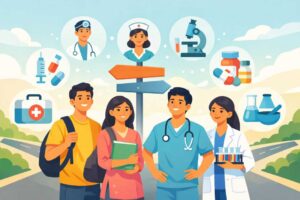
What Are Healthcare Jobs?
Healthcare jobs include all professions involved in maintaining, improving, and restoring human health. These jobs exist in hospitals, clinics, laboratories, nursing homes, pharmacies, research centres, and even in people’s homes.
Unlike many other careers, healthcare jobs have a direct impact on people’s lives. A single decision or action can mean relief from pain, recovery from illness, or even survival.
Healthcare jobs can broadly be divided into:
Clinical roles (direct patient care)
Non-clinical roles (support, management, and administration)
Allied health and technical roles
Community and public health roles
Each role, big or small, is essential to the healthcare system.
Why Choose a Top Career in Healthcare?
People choose healthcare careers for different reasons, but some motivations are universal.
Job Security and Stability
Healthcare is one of the most stable industries globally. Illness, aging, and medical needs will always exist, regardless of economic conditions. This makes healthcare jobs relatively recession-proof.
Opportunity to Help Others
Healthcare professionals often describe their work as deeply fulfilling. Knowing that your efforts directly improve someone’s quality of life brings a sense of purpose that few other careers offer.
Wide Range of Career Options
From highly specialized surgeons to community health workers, healthcare offers roles for people with different educational backgrounds, interests, and skills.
Career Growth and Learning
Medicine and healthcare technology constantly evolve. This keeps the field intellectually stimulating and full of learning opportunities.
Respect and Trust
Healthcare professionals are widely respected in society. Patients trust them during their most vulnerable moments.
Major Types of Healthcare Jobs
1. Doctor Jobs
Doctor jobs are often seen as the heart of the healthcare system. When people fall sick, feel pain, or face life-threatening situations, doctors are the ones they trust the most. Being a doctor is not just about wearing a white coat—it’s about making critical decisions, showing compassion, and standing strong even in the most difficult moments.
What Do Doctors Do?
Doctors diagnose illnesses, recommend treatments, prescribe medicines, and guide patients toward recovery. Depending on their specialization, their daily work may include:
Examining patients and understanding symptoms
Ordering and interpreting medical tests
Performing surgeries or procedures
Advising patients on lifestyle and preventive care
Coordinating with nurses and other healthcare staff
Every day is different for a doctor, which makes the job challenging but also deeply meaningful.
Types of Doctor Jobs
There are many types of doctors, and each plays a unique role:
General Physician – Treats common illnesses and provides primary care
Surgeon – Performs operations to treat injuries or diseases
Pediatrician – Cares for infants and children
Gynecologist – Focuses on women’s health
Cardiologist – Treats heart-related conditions
Orthopedic Doctor – Deals with bones and joints
Psychiatrist – Treats mental health conditions
This wide variety allows students to choose a path that matches their interest and strengths.
Education Required to Become a Doctor
Becoming a doctor requires dedication and patience:
Clear 12th with Science (PCB)
Qualify NEET
Complete MBBS
Optional specialization through MD/MS
The journey is long, but for many doctors, the sense of achievement makes it worthwhile.
Skills Needed for Doctor Jobs
Strong medical knowledge
Decision-making ability
Calmness under pressure
Empathy and communication skills
Willingness to keep learning
Pros and Challenges
Pros
High respect in society
Good income with experience
Opportunity to save lives
Challenges
Long working hours
Emotional stress
High responsibility
Despite the challenges, doctor jobs are ideal for those who truly want to make a difference in people’s lives.
2. Nursing Jobs
Nursing jobs are among the most caring and people-focused roles in healthcare. Nurses are often the first and last people a patient interacts with during treatment. They don’t just provide medical care—they offer comfort, support, and reassurance when patients need it the most.
What Do Nurses Do?
Nurses work closely with doctors and patients. Their responsibilities include:
Monitoring patient health
Administering medicines and injections
Assisting during surgeries and procedures
Providing emotional support to patients and families
Maintaining medical records
In many cases, nurses become the emotional strength for patients during recovery.
Types of Nursing Jobs
Staff Nurse – Works in hospitals and clinics
ICU Nurse – Handles critically ill patients
Pediatric Nurse – Cares for children
Psychiatric Nurse – Supports mental health patients
Community Health Nurse – Works in rural and public health programs
Each role requires patience, empathy, and dedication.
Education Path for Nursing Jobs
Nursing careers are more accessible than many people think:
ANM (Auxiliary Nursing Midwifery)
GNM (General Nursing and Midwifery)
B.Sc Nursing
M.Sc Nursing (for specialization)
These courses allow students from different backgrounds to enter healthcare.
Skills Required for Nursing Jobs
Compassion and empathy
Good communication
Physical and emotional strength
Teamwork skills
Attention to detail
Why Choose Nursing?
Advantages
High demand in India and abroad
Job security
Opportunity to work overseas
Emotional satisfaction
Challenges
Long shifts
Physically demanding work
Emotional burnout
Nursing is ideal for those who genuinely care about people and want a stable, respected career.
3. Allied Health Professionals
Allied health professionals support diagnosis, treatment, and rehabilitation.
Examples Include:
Physiotherapists
Radiographers
Occupational Therapists
Speech Therapists
Medical Laboratory Technicians
These roles may not always be in the spotlight, but healthcare cannot function without them.
4. Pharmacist
Pharmacists ensure patients receive the right medicines in the correct dosage. They also educate patients about side effects and interactions.
Workplaces:
Hospitals
Retail pharmacies
Pharmaceutical companies
Research labs
Education Required:
D.Pharm / B.Pharm / M.Pharm
Pharmacists act as a crucial link between doctors and patients.
5. Medical Laboratory Technician
Lab technicians perform tests on blood, tissue, and other samples to help diagnose diseases.
Key Responsibilities:
Conduct medical tests
Maintain lab equipment
Ensure accuracy and safety.
This job is ideal for people who enjoy science and precision work.
6. Healthcare Administration and Management
Not all healthcare jobs involve patient care. Administrators manage hospital operations, finances, staffing, and compliance.
Roles Include:
Hospital Administrator
Healthcare Manager
Medical Records Officer
Health Information Manager
These professionals ensure healthcare systems run smoothly.
7. Public Health and Community Health Jobs
Public health professionals focus on preventing disease and promoting health at a population level.
Common Roles:
Public Health Officer
Epidemiologist
Health Educator
Community Health Worker
These jobs are crucial during disease outbreaks, vaccination programs, and awareness campaigns.
8. Mental Health Professionals
Mental health is finally getting the attention it deserves. Mental healthcare jobs are growing rapidly.
Roles Include:
Psychologist
Psychiatrist
Counselor
Mental Health Social Worker
These professionals help people manage stress, anxiety, depression, and other mental health conditions.
Educational Pathways in Healthcare Jobs
Healthcare careers require structured education and training. The path depends on the role you choose.
Entry-Level Courses
ANM
GNM
Diploma in Medical Lab Technology
Diploma in Pharmacy
Undergraduate Degrees
MBBS
BSc Nursing
B.Pharm
BSc Allied Health Sciences
Postgraduate and Specialized Courses
MD/MS
M.Sc Nursing
MPH (Master of Public Health)
MBA in Healthcare Management
Continuous learning is a must in healthcare due to new technologies and treatments.
Healthcare Jobs After 12th: Career Options Without Waiting Too Long
Not everyone wants to spend many years studying before starting a career. The good news is that there are many healthcare jobs you can pursue right after 12th, especially if you are passionate about the medical field.
Fore More Details Click Here
Healthcare Jobs After 12th (Science Stream)
If you studied PCB (Physics, Chemistry, Biology):
MBBS (Doctor)
B.Sc Nursing
B.Pharm (Pharmacy)
B.Sc Medical Lab Technology
B.Sc Radiology
B.Sc Physiotherapy
If you studied PCM:
Biomedical Engineering
Healthcare Technology courses
Healthcare Jobs After 12th (Any Stream)
Some healthcare roles don’t strictly require science:
Hospital Administration (after degree/diploma)
Medical Records Technician
Health Information Management
Emergency Medical Technician (EMT)
Diploma Courses After 12th
Diploma courses are a great option for quick entry into healthcare:
Diploma in Medical Lab Technology
Diploma in Radiology
Diploma in Pharmacy (D.Pharm)
Diploma in Nursing
These courses usually take 1–3 years and offer good job opportunities.
Skills That Matter More Than Marks
In healthcare jobs after 12th, success often depends on:
Willingness to learn
Patience and discipline
Communication skills
Compassion and ethics
Career Growth Opportunities
Many students start with diplomas and later upgrade their qualifications. Healthcare allows flexible growth, meaning you don’t have to stop learning at one point.
More Information
Whether you dream of becoming a doctor, feel called toward nursing, or want to start working through healthcare jobs after 12th, the healthcare sector offers endless possibilities. These careers are not just about earning money—they are about serving people, building trust, and making a real impact on society.
Skills Required for Healthcare Jobs
While technical knowledge is essential, soft skills are equally important.
Empathy and Compassion
Patients are often scared or in pain. Understanding their emotions builds trust.
Communication Skills
Explaining medical information in simple language is critical.
Teamwork
Healthcare is a team effort involving doctors, nurses, technicians, and support staff.
Attention to Detail
Small mistakes can have serious consequences.
Emotional Strength
Healthcare professionals often deal with suffering and loss.
Salary and Career Growth in Healthcare Jobs
Salaries in healthcare vary based on role, experience, location, and specialization.
Entry-level roles offer moderate salaries.
Specialized doctors and surgeons earn high incomes.
Overseas opportunities often offer higher pay.
Career growth is steady with experience and qualifications.
More importantly, healthcare jobs offer long-term stability and respect.
Challenges in Healthcare Jobs
While rewarding, healthcare jobs are not easy.
Common Challenges:
Long and irregular working hours
Emotional burnout
High-pressure situations
Risk of exposure to infections
However, many professionals feel that the satisfaction of helping others outweighs these challenges.
The Future of Healthcare Jobs
Healthcare is evolving rapidly with technology.
Emerging Trends:
Telemedicine
Artificial Intelligence in diagnostics
Digital health records
Personalized medicine
Home healthcare services
These trends are creating new job roles and opportunities for future healthcare professionals.
Healthcare Jobs in India: Growing Opportunities
India’s healthcare sector is expanding due to:
Population growth
Aging population
Government health schemes
Increased private investment
There is strong demand for doctors, nurses, lab technicians, and healthcare managers both in India and abroad.
Is a Healthcare Career Right for You?
Healthcare may be right for you if:
You want meaningful work.
You are patient and empathetic.
You can handle responsibility.
You are willing to learn continuously.
It’s not just a job—it’s a lifelong commitment.
Conclusion: Healthcare Jobs Are Careers with Purpose
Healthcare jobs stand apart from many other professions because they are deeply human. They combine science, skill, compassion, and service in a way that truly impacts lives. Whether you work directly with patients or behind the scenes, your contribution matters.
In a world where technology is replacing many traditional jobs, healthcare remains irreplaceable because it is built on human connection. The smile of a recovering patient, the gratitude of a family, and the knowledge that your work saves lives—these rewards go beyond money or titles.
If you are looking for a career that offers stability, respect, growth, and a sense of purpose, healthcare jobs may be the path you are meant to follow.